 Tyne Seedling
You will master lighting clearance distances, daily photoperiod timing, and cool-air ventilation on indoor growing racks. Your winter salads and brassica leaves will stay dense and low rather than stretching into pale threads.
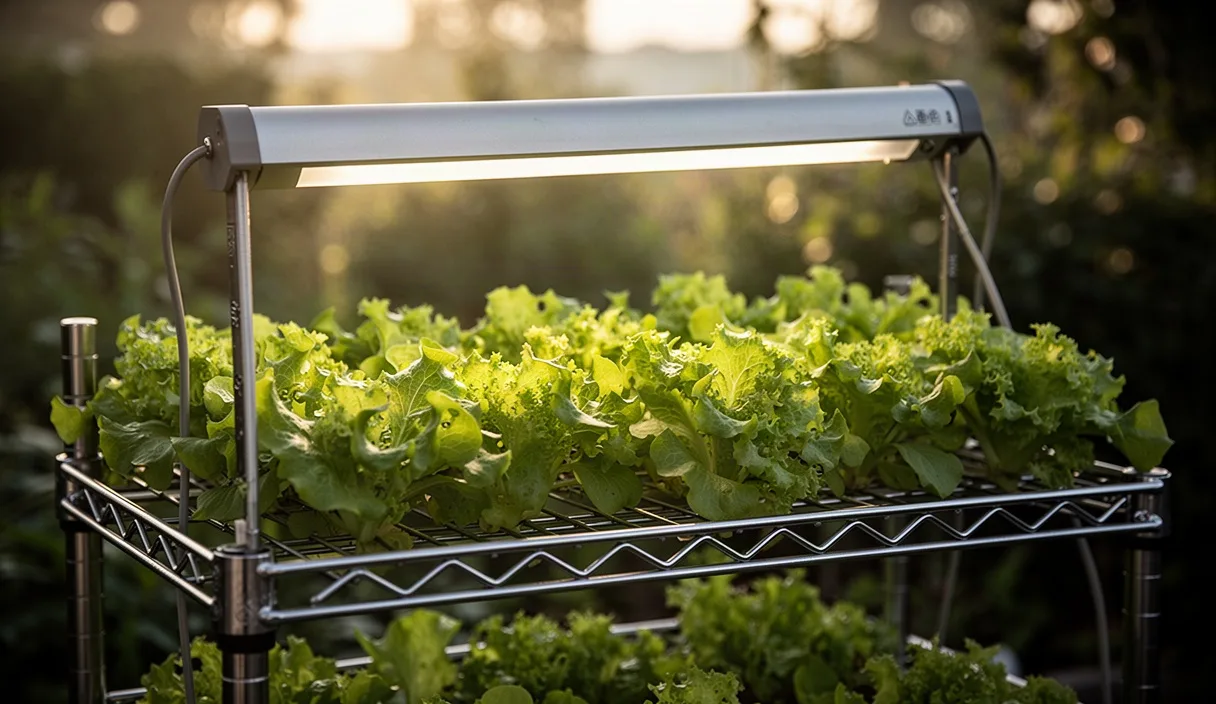
- Position linear light tubes five to seven centimeters above leaf tips to prevent stem elongation.
- Set an inexpensive mechanical timer for fourteen hours of daily illumination to mimic early summer skies.
- Use a quiet computer fan on low speed to stir foliage and stimulate thick cell wall development.
Winter balconies present a peculiar challenge for those of us who grow food in modest outdoor spaces. As the sun dips toward the horizon in late November, the shadows cast by upper floors, concrete parapets, and brick railings stretch deeper into our planting boxes. Cold-hardy greens such as kale, tatsoi, winter cress, and Asian mustards can easily withstand low temperatures, yet their vigor stalls when day length drops and ambient light becomes dim and diffuse. Instead of yielding thick, leathery leaves with crisp petioles, balcony brassicas grown under low winter sun turn slack, stretching upward on pale, fragile stalks that flop at the first sign of frost.
To produce stout, thick-walled greens capable of taking hard freezes in their stride, we bring supplementary light directly to our balcony benches. This does not require commercial greenhouse infrastructure, but it does demand an understanding of electrical fixtures, mounting hardware, thermal management, and plant physiology. When we build an outdoor lighting rig that shelters under a balcony soffit or within a sheltered shelving unit, we take physical control over the photon density our crops receive, balancing heat against light so our plants stay squat, sturdy, and richly colored.
Understanding Light Needs of Balcony Brassicas
Brassicas are demanding crops when it comes to photon volume. In field agriculture, winter varieties thrive under crisp, open skies where photon flux density reaches high levels even on cold mornings. When confined to balcony containers, these plants require an absolute minimum Daily Light Integral (DLI) of 12 to 14 mol per square meter per day to maintain dense cellular structure. Without this daily sum of photons, cells in the hypocotyl divide and elongate rapidly in an evolutionary effort to outgrow competing foliage, producing leggy seedlings with poor vascular strength.
On a partially covered balcony, natural ambient winter daylight rarely supplies more than 4 to 6 mol per square meter per day, especially on overcast days common along northern coastlines. Supplementary fixtures bridge this gap. We measure our light output using Photosynthetic Photon Flux Density (PPFD), which represents the active light particles hitting a square meter of canopy per second. For stout winter greens, we aim for a canopy-level PPFD between 180 and 240 micromoles per square meter per second over a steady schedule.
This steady influx of photons triggers the synthesis of anthocyanins and thickens the waxy cuticle on the upper leaf surface. The cuticle protects leaf cells from ice crystal formation during nighttime freezes. If we provide adequate photon density, brassicas produce shorter internodes, broader blades, and root systems that grip the container substrate with tenacity.
Selecting Full-Spectrum White Tubes Over Tinted Bulbs
When selecting fixtures for a balcony workshop or cold frame, we deliberately bypass the pink and purple blurple lights popular in amateur hydroponic kits. These fixtures isolate red and blue wavelengths, but they make leaf inspection difficult and fail to replicate the balanced spectral output under which wild brassicas evolved. Instead, we reach for full-spectrum white linear LED tubes with a color temperature rated between 4000K and 6500K.
A broad spectral band offers practical benefits for the small-scale grower. The green and yellow bands within full-spectrum white light penetrate deeper into the lower foliage of tight kale and mustard rosettes, reaching shaded leaves that narrow-band fixtures miss. Furthermore, working beneath crisp daylight-spectrum tubes allows us to spot early signs of aphid colonies, fungal leaf spots, or nutrient deficiencies long before they spread through a seed tray.
| Fixture Style | Color Spectrum | Canopy Penetration | Moisture Resilience | Typical Draw |
|---|---|---|---|---|
| Dual-band pink LED arrays | Narrow red and blue peaks | Shallow; lower canopy stays shaded | Moderate to low (often IP20) | 45 to 65 watts |
| Linear T5 fluorescent tubes | Broad spectrum (6400K) | Moderate; decays quickly with distance | Low; ballast vulnerable to damp | 54 watts per four-foot tube |
| Full-spectrum white LED strips | Continuous daylight (4000K-6500K) | High; diffuse spread across trays | High when IP65-rated | 32 to 42 watts per four-foot bar |
For outdoor and balcony use, moisture resistance is non-negotiable. Balcony air gathers condensation as evening settles, and watering close containers with a narrow-spouted can inevitably produces splashes. We look specifically for fixtures bearing an Ingress Protection rating of IP65 or higher. These feature sealed silicone end-caps, waterproof gasketed cord entries, and powder-coated aluminum extrusions that shed water and resist corrosion caused by salty winter air.
Calculating Distance: Keeping Lights Close Without Heat Scorching
The inverse square law governs how light spreads from a point source: double the distance between the fixture and the leaf, and the light intensity drops to one quarter of its initial value. Linear LED bars soften this falloff somewhat through wide lens arrays, but proximity remains the single most important factor in maintaining stout seedling growth. If our fixtures hang 18 inches above the tray, the light spreads across the balcony floor instead of nourishing the plants.
We suspend our linear LED bars between 3 and 6 inches above the growing tips of the brassicas. At this close distance, the canopy receives the full concentration of photons without wasteful dispersion. However, keeping fixtures this close demands careful attention to surface temperatures. While LEDs emit far less radiant heat than high-pressure sodium or metal halide bulbs, the diodes and internal driver circuitry still generate thermal energy that can dry out tender foliage or scorch leaf margins.
To safely manage light height, we construct an adjustable suspension system:
- Select mounting hardware: Fasten stainless steel screw hooks into the ceiling joists, soffit framing, or the upper tier of a wooden shelving unit.
- Attach jack chains: Hang lengths of zinc-plated or stainless steel sash chain from the hooks. Chains allow link-by-link height changes without the slippage common to nylon rope ratchets.
- Secure the fixture: Clip carabiners through the mounting tabs on the aluminum housing of the light bar, latching them directly into the chain links.
- Conduct the hand test: Rest the back of your hand against the uppermost leaves for sixty seconds while the light is running. If you feel radiant warmth accumulating on your skin, raise the fixture by two chain links. The leaves should receive bright illumination while remaining completely cool to the touch.
Automating the Fourteen-Hour Daily Light Cycle
Winter greens rely on steady day length cues to moderate their growth habits. Short winter days signal many brassica varieties to hunker down and slow cell division. By supplementing daylight to create a strict 14-hour photoperiod, we simulate early spring conditions, encouraging steady leaf expansion while preventing the plants from initiating premature flowering bolts that cold stress often triggers.
Consistency matters far more than intensity spikes. Fluctuating day lengths stress plant vascular systems and lead to erratic moisture uptake. To keep this schedule rigid, we rely on heavy-duty outdoor digital timers or mechanically grounded timers placed inside weatherproof connection boxes. If you are running multiple fixtures or pairing them with warming cables, consult a licensed electrician to verify your outdoor balcony receptacle is wired through a functional Ground Fault Circuit Interrupter (GFCI) to prevent moisture-induced shorts.
We program our fixtures to activate before dawn and run past dusk, centered around midday:
- Morning activation: The timer switches the fixtures on at 06:00, catching the seedlings as ambient outdoor light begins to shift from total dark to pre-dawn gray.
- Midday overlap: From 08:30 to 16:00, the fixtures run simultaneously with natural daylight, boosting the weak winter sun and neutralizing shadows cast by surrounding buildings.
- Evening extension: The lamps remain illuminated until 20:00, providing four hours of supplementary photon accumulation after the sun has vanished below the horizon.
- Dark rest period: The lights shut down completely for ten hours, giving the plants uninterrupted time for cellular respiration, carbohydrate translocation, and root development.
Air Circulation Mechanics: Simulating Natural Wind
Light alone does not make a seedling stout; mechanical stimulation is the second half of the equation. In natural conditions, wild winds flex plant stems, producing micro-tears in cellular fibers. In response to this mechanical stress, plants produce ethylene and redistribute auxin, thickening their main stems and developing dense vascular rings that prevent snapping. Under a sheltered balcony roof, however, air often stagnates in cold pockets.
To recreate this natural wind stress, we integrate small, low-voltage circulation fans into our grow light shelving. A pair of 120-millimeter ball-bearing computer cooling fans, wired to a weather-sealed 12-volt direct current adapter, provides an ideal breeze. Unlike large oscillating domestic fans, these compact units draw minimal current and can be zip-tied directly to the vertical uprights of your light frame.
Position the fans so the airflow sweeps horizontally across the foliage rather than blowing straight down onto the potting substrate. A straight downward blast dries out container compost rapidly and chills plant roots unnecessarily. Adjust the fan distance or speed until the leaves of your mustard and kale plants exhibit a gentle, continuous flutter. The motion should look like leaves stirring in an open pasture breeze, not whipping under a gale. This gentle flexing also moves humid air away from the leaf stomata, improving transpiration rates and preventing moisture buildup that fosters grey mold and damping-off fungi.
Troubleshooting Stretched and Pale Balcony Stems
Even with careful planning, balcony crops communicate imbalances through structural shifts. Observing the angle of petioles, the tint of new leaves, and the diameter of seedling stems allows us to diagnose setup issues before seedlings collapse completely. Diagnosing stem and color issues involves matching symptoms to light and physical causes:
Elongated, thin stems leaning in one direction: This symptom shows that ambient light from the open sky is competing with your fixtures, and your lights are hanging too high. When seedlings lean sideways toward the balcony railing, they are telling you that natural light, though weak, is perceived as more directional than the fixtures overhead. Lower your light bars by 2 inches and center them precisely over the container line to pull the plants back to a vertical growth axis.
Bleached white or translucent patches on upper leaves: Light bleaching occurs when photon intensity overwhelms the plant's chlorophyll repair capacity, often compounded by dry roots. If the leaves directly under the LED arrays turn white or straw-colored while lower leaves stay green, your fixture is too close, or your light duration is excessive. Raise the fixture 3 inches and check that the potting soil remains uniformly moist to the touch.
Purple-tinted leaf undersides with stunted growth: A deep purple or reddish hue on winter brassica leaves is often mistaken for light stress. In truth, it usually indicates phosphorus deficiency induced by low soil temperatures. Brassicas cannot take up phosphorus efficiently when container root zones drop below 45 degrees Fahrenheit (7 degrees Celsius), regardless of how much light you supply. Insulate your planting tubs with burlap, bubble wrap, or scrap timber boards beneath the pots to decouple them from cold concrete balcony slabs.
Common Mistakes
The most frequent mistake we see is using cheap indoor desk lamps or non-rated clip lights outdoors. Balcony environments experience wind-driven mist, rain, and heavy night dew. Non-sealed fixtures corrode within weeks, creating immediate electrical hazards.
Another routine error is failing to adjust fixture height as seedlings grow. A tray of tatsoi can double in height across twelve mild winter days. If you do not raise your suspension chains, the top canopy will press directly against warm diode covers, causing contact scorches across the newest growth.
Growers also tend to overwater brassicas grown under supplementary lights. While the lights accelerate vegetative growth, cool balcony air keeps substrate evaporation low. Always push a finger 1 inch into the potting compost; if the soil feels damp and cool, postpone watering, even if the grow lights have been running for twelve hours straight.
Next Steps for Setting Up Your Rig
Begin by taking inventory of your balcony layout. Measure the width of your sheltered growing space and note where the prevailing winter rain lands. Secure an outdoor-rated, waterproof GFCI outlet cover before bringing any electrical gear onto the balcony.
Source two four-foot, IP65-rated linear full-spectrum LED bars along with matching suspension chains and stainless steel S-hooks. Assemble your support frame using sturdy rot-resistant timber, like cedar or larch, or rely on a coated steel wire shelf unit that can handle moisture without rusting. Once your frame is square, plumb, and anchored against high balcony gusts, hang your fixtures, hook up your digital timer, and set your 14-hour cycle. Sow your cold-hardy brassica seeds in flat wooden trays, settle them under the clean white glow of your new setup, and watch the emergence of thick, dark green leaves that greet winter with quiet resilience.
Our field notes serve general horticultural education; consult your local agricultural extension service for regional biosecurity rules and persistent plant pathology. Disclaimer

Complementary Reading
-
 Container & Balcony Crops 9 min read
Diagnosing Leaf Curl and Yellowing on Balcony Peppers
You will learn to distinguish between overwatering, wind dehydration, and calcium lockout in small container soil. Pinpointing the root issue keeps your potted sweet and hot peppers setting crisp, full pods.
-
 Container & Balcony Crops 10 min read
Sowing Winter Radishes and Asian Greens for Autumn Bites
You will learn how to schedule mid-August sowings into empty containers as the harsh summer sun relents. Quick-maturing daikon radishes and hardy pak choi flourish in cooling weather, yielding crisp leaves until hard frosts.